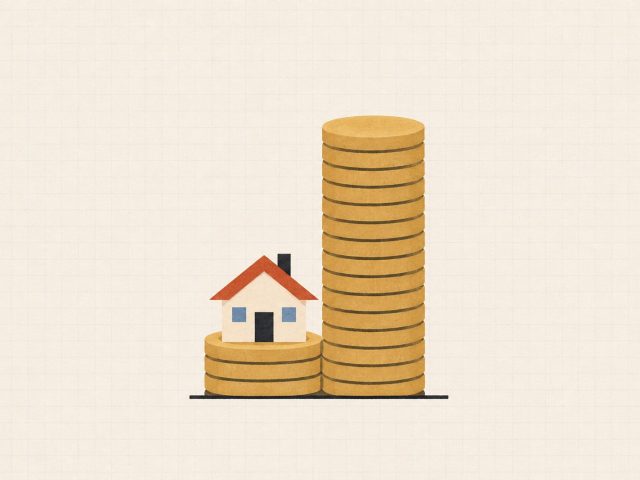
Imagine two neighbors, both 35, both putting $100,000 into a retirement account on the same day. They pick similar funds. They leave the money alone. The only difference is a number most people never read: the annual fee.
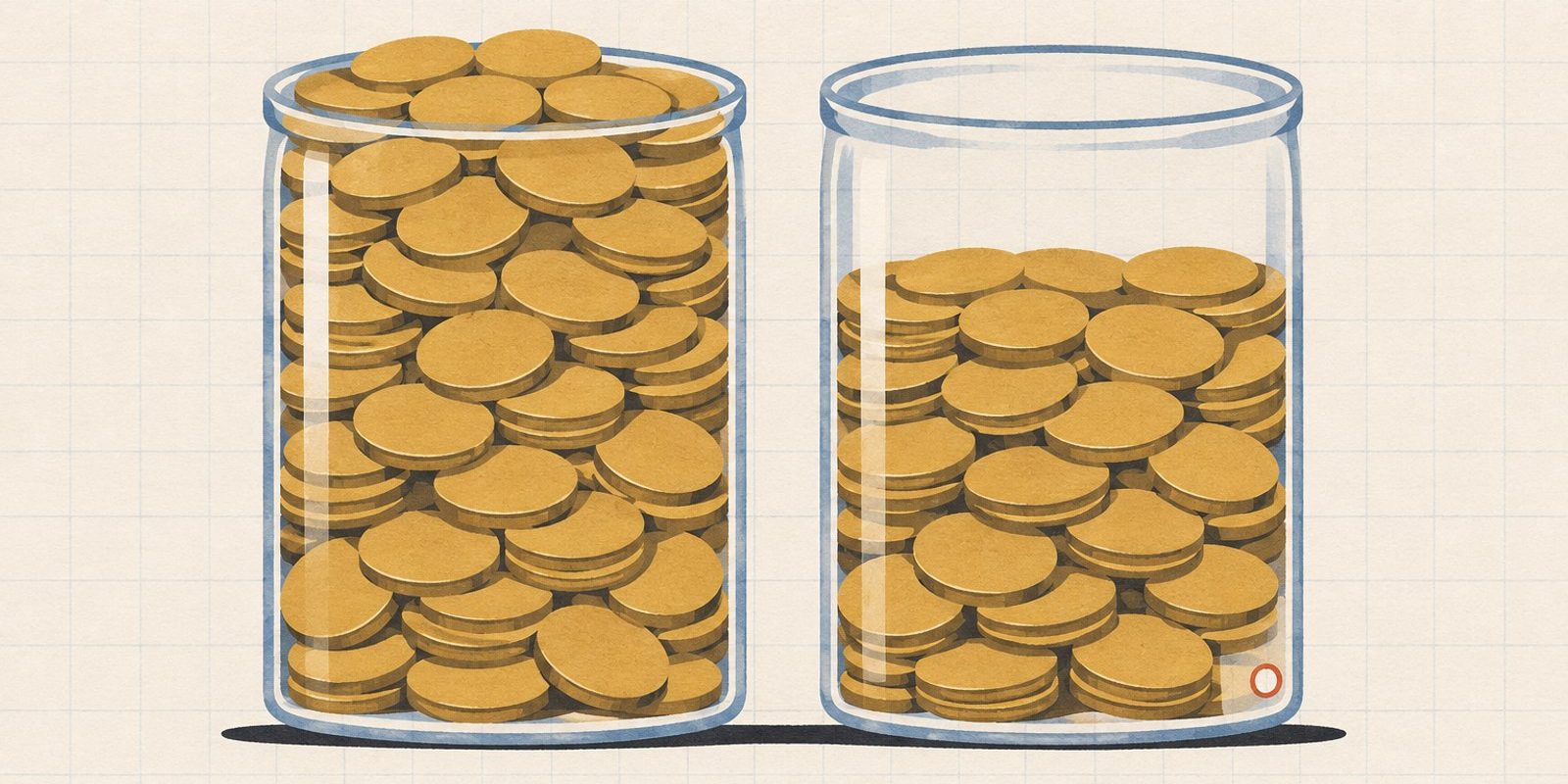
One neighbor’s fund charges 0.1% a year. The other’s charges 1%. Thirty years later, one of them has about $126,000 more. That gap is bigger than the entire amount either of them started with. Every scenario here is an illustration, not a forecast.
What the fee actually is
A fund’s “expense ratio” is a yearly charge taken as a slice of your balance. You never get a bill. The fee is quietly subtracted from the fund’s return, so it hides in plain sight.
Fees have fallen a lot. Morningstar found that the asset-weighted average fee paid by fund investors dropped from 0.80% in 2006 to 0.32% in 2025 (Morningstar, 2026). The Investment Company Institute (ICI) reported that equity mutual funds averaged 0.40% in 2025 and index equity ETFs averaged 0.14% (ICI, 2026). “Asset-weighted” means each fund counts in proportion to the money invested in it, so it reflects what investors really pay.
The ICI also notes that the simple average, which counts every fund equally, is higher. Equity mutual funds averaged 1.09% that way in 2025 (ICI, 2026). Funds with high fees exist, but investors have been moving most of their money into the cheaper ones. Morningstar found the cheapest fifth of funds took in $694 billion in 2025, while the other 80% saw $244 billion flow out (Morningstar, 2026).
The 30-year math
Take $100,000 and assume a steady 6% a year before fees. This is a round, made-up number chosen to keep the math clean. Real markets are bumpy. Then subtract each fee every year and let it compound for 30 years.
| Annual fee | Net yearly growth | Balance after 30 years | Lost to fees vs. no fee |
|---|---|---|---|
| 0% (no fee, for reference) | 6.00% | $574,349 | $0 |
| 0.10% (low-cost index fund) | 5.90% | $558,314 | $16,035 |
| 0.32% (2025 US average) | 5.68% | $524,547 | $49,802 |
| 0.57% (average active fund) | 5.43% | $488,569 | $85,780 |
| 1.00% | 5.00% | $432,194 | $142,155 |
Illustration, not a forecast. The 0.57% row matches Morningstar’s 2025 average for actively managed funds (Morningstar, 2026).
Why a “small” number is not small
One percent sounds like pocket change. But look at it from the other side. If your fund earns 6%, a 1% fee takes one-sixth of every year’s gain. And because you lose that slice each year, you also lose everything that slice would have earned later.
A 1% fee does not take 1% of your money. Over 30 years, it takes about 30% of your growth.
justanumbers.com editors (our own line, not a quote)
The Investor.gov compound interest calculator lets you test this yourself, changing the rate by a fraction of a point and watching 30 years shift.
Think of it as a leaky bucket. A tiny leak looks harmless on day one. After 30 years, the missing water is a swimming pool. The fee is the same size every year, but because you pay it on a growing balance, it keeps getting bigger in dollars even as the percentage stays still.
The part that complicates the story
Here is the catch. Most people do not pay 1%. The average, as noted, is about 0.32%, and the gap between average and a bargain index fund is much smaller than the gap shown for 1%.
A fee is also not the same as a bad deal. Some people pay more because they get advice, planning, or a fund that does something they cannot do alone. Whether that is worth it depends on what you get. Cheap does not guarantee better returns in any single year, and the 6% in our example is not a promise. Fees are just the one part of investing you can see before you buy.
Also check your actual statement. Fund fees are one layer. Advisor fees, account fees, and sales charges can stack on top, and the total is what counts.
A simple habit helps. Find the expense ratio on your plan’s fund list, write it down, and compare it with the 0.32% average. If yours is far above, ask what you get for the difference. If it is below, you are already ahead of most savers.
The takeaway
Over 30 years, the fee you never notice can be the biggest bill you ever pay.
For illustration only. Not financial advice.
Sources
- Morningstar Manager Research, “2026 US Fund Fee Study: Notable fee trends through 2025”, May 2026. link
- Investment Company Institute, “Trends in the Expenses and Fees of Funds, 2025” and news release “Mutual Fund and ETF Fees Remained Near Historic Lows in 2025”, March 2026. link
- U.S. Securities and Exchange Commission, Investor.gov, “Compound Interest Calculator”. link