You are at the closing table. The pen is attached to a little chain. The stack of papers is two inches thick, and you sign your name until your hand cramps. The house costs $416,700. You feel like you are buying one house.
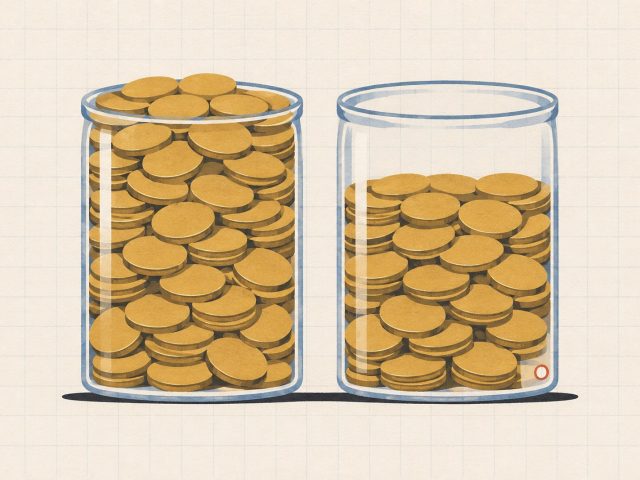
The math says otherwise. Over 30 years, the interest alone on a typical mortgage today adds up to more than the price of the house. Every scenario here is an illustration, not a forecast.
The typical house, the typical loan
The National Association of Realtors reported a median existing-home price of $416,700 in October 2026 (NAR, 2026). Half of homes sold for more, half for less. Put 20% down, which is $83,340, and you borrow $333,360.
The latest Freddie Mac survey, from November 25, 2026, put the average 30-year fixed rate at 7.21% and the 15-year fixed rate at 6.54% (Freddie Mac, 2026). Your own rate depends on your credit and your lender. This is a typical case, not a quote.
Why borrow at all? Because most buyers cannot pay $416,700 in cash. A mortgage lets you live in the house while you pay for it. The lender charges for that favor, and the longer the loan, the bigger the charge. The monthly payment feels manageable, which is exactly why the total is easy to miss.
Add up everything on the 30-year loan and you pay $815,424 to the lender, plus the $83,340 you put down. That is $898,764 for a house priced at $416,700.
Three loans, one house
Here is the same $333,360 loan under three setups. The payments include principal and interest only. Taxes, insurance and fees come on top.
| Loan | Rate | Monthly payment | Total interest | Interest vs. home price |
|---|---|---|---|---|
| 30-year, today’s average | 7.21% | $2,265 | $482,064 | 116% |
| 30-year, one point lower | 6.21% | $2,044 | $402,440 | 97% |
| 15-year, today’s average | 6.54% | $2,911 | $190,667 | 46% |
Illustration, not a forecast. The 6.21% row is a hypothetical rate one percentage point below the current average.
What one point is worth
One percentage point sounds tiny. On this loan it is worth $221 a month, or $79,624 in total interest over 30 years. That is a new car, or a big chunk of a college fund. It is also why people shop around: a small shift in the rate becomes a huge shift in the total.
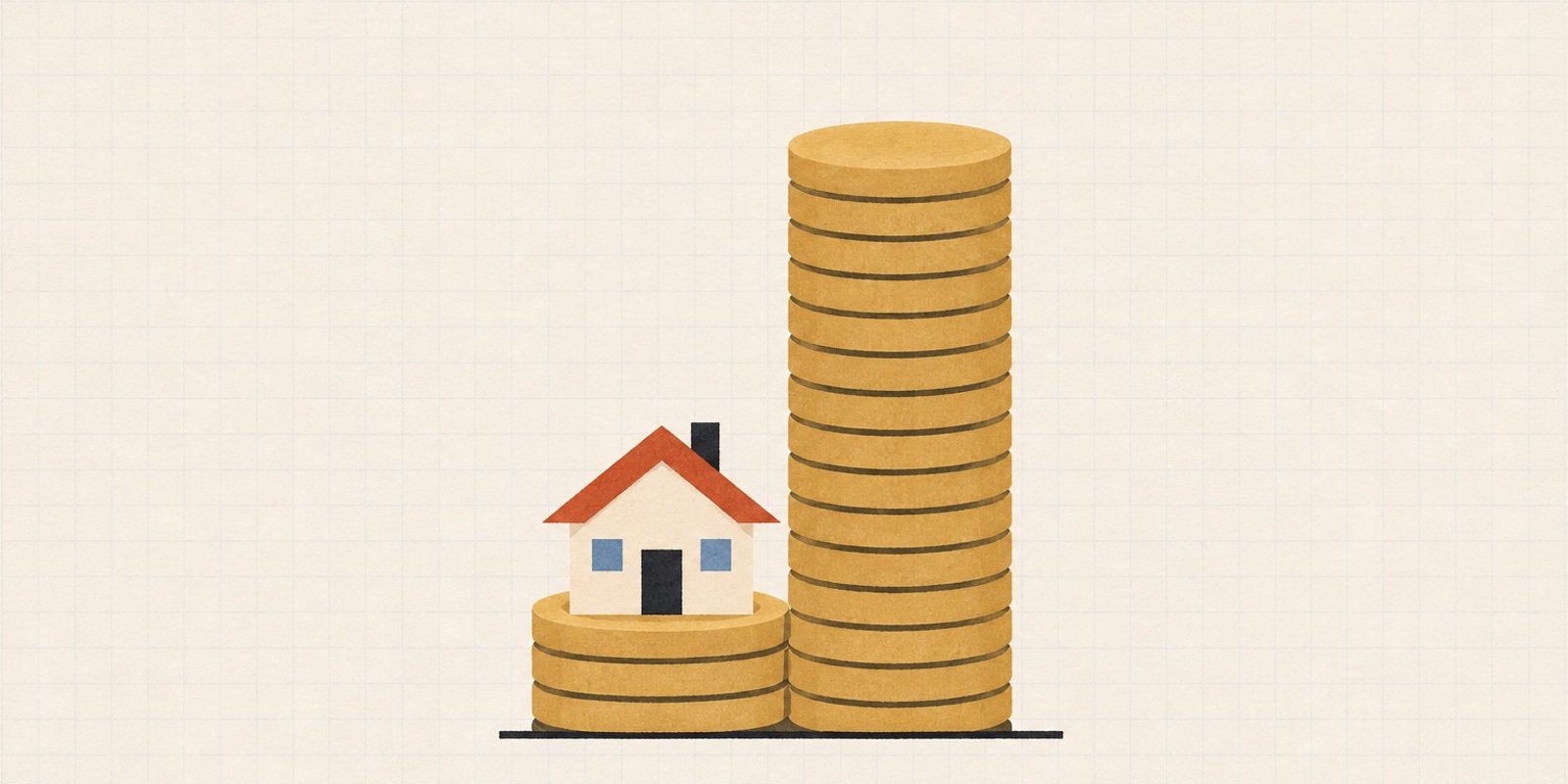
The house has one price tag. The loan has another, and it is bigger.
justanumbers.com editors (our own line, not a quote)
The 15-year trade
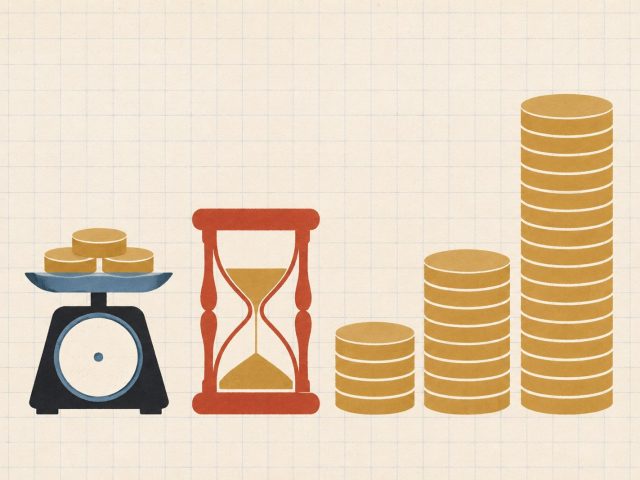
A 15-year loan cuts the interest by $291,397 compared with the 30-year loan above. The price is a payment that is $646 a month higher. That is the trade: pay more each month and owe far less overall.
Why does time matter so much? Because interest is charged on whatever you still owe. On a 30-year loan at 7.21%, your very first payment is about $2,265, and roughly $2,003 of it is interest. Almost 90 cents of every early dollar goes to the lender, not to the house. It takes years before the balance falls fast.
The part that complicates the story
Here is the honest catch. You are not likely to pay all 30 years of interest. Many people sell, move or refinance well before the loan ends. And the house itself usually has a value that can rise or fall over the decades, which this math ignores.
A higher monthly payment is also a real risk. A 15-year loan is cheaper in total but can strain a budget, leaving less cushion for repairs or a job loss. “Costs more than the house” describes the interest on paper, not a verdict on whether to buy. Rates change weekly, and your numbers will differ.
There are also middle paths. Even a modest extra payment toward the balance each month shortens the loan and trims the interest, because every dollar you repay early stops accruing interest. Check whether your loan charges a penalty for that first.
One more reality check: the median is a midpoint, not a prediction. Prices swing by city and by season, and they are a national figure, not your street. Your loan will be bigger or smaller, but the pattern, where time and rate do most of the work, stays the same.
The takeaway
Before you ask what the house costs, ask what the loan costs.
For illustration only. Not financial advice.